Order-control guide
Golden sample, production sample, and random bulk pull are different controls.
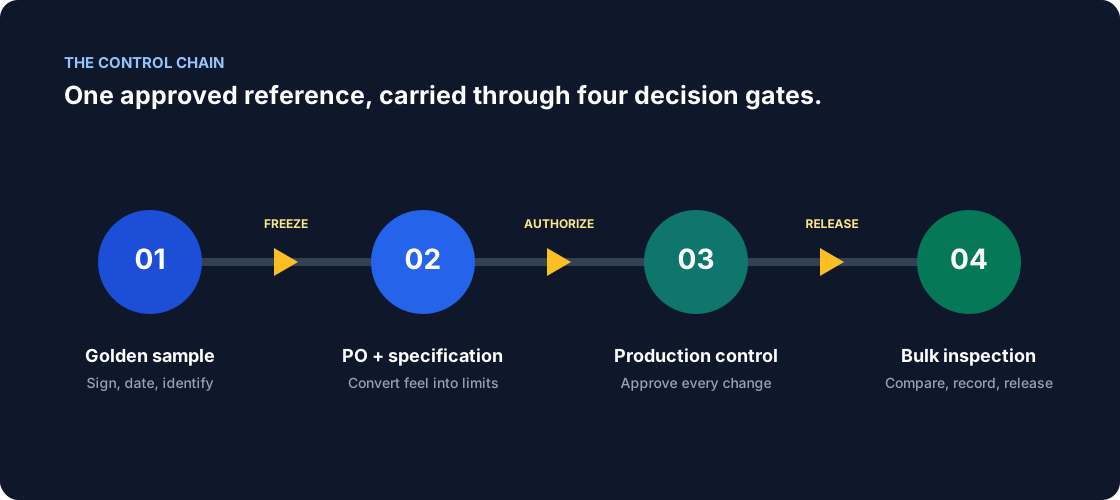
A good sample is not a transferable guarantee. The buyer needs a versioned product definition, a traceable physical reference, written change control, and an inspection plan tied to the actual production lot.
- Editorial status
- Source-checked buyer guide
- Last reviewed
- Prepared by
- AllForSourcing Editorial Desk
Research basis: The current ISO 2859-1:2026 standard record and current CPSC guidance on representative samples, material changes, testing and certification responsibilities.
Boundary: This workflow does not approve a sample, select an AQL plan, establish regulatory compliance, or prove that a retained unit represents future production.
Four artifacts, four jobs
- Development sample
- Test the design direction and discover ambiguous requirements.
- It may use hand-selected components or processes that do not represent normal production.
- Approved reference sample
- Record the physical appearance and performance accepted by buyer and supplier.
- Often called a golden sample, but the label alone does not identify materials, tolerances, tests, or production controls.
- Pre-production sample
- Check the final BOM, tooling, artwork, packaging, labels, and intended manufacturing process before the lot begins.
- One prepared unit still cannot establish how the whole production lot will perform.
- Random bulk pull
- Select units from the actual lot for visual, dimensional, functional, packaging, or laboratory checks.
- The sampling method, lot definition, defect classes, and acceptance rule must be written before inspection.
Build the evidence chain
- 01
Freeze the product definition
Version the drawing, BOM, materials, colour, artwork, packaging, labels, firmware, tests, tolerances, and acceptable reference files.
- 02
Identify the physical sample
Give each retained unit an ID, date, version, seal or tamper mark, photographs, measurements, and named holders.
- 03
Define material change
List which supplier, component, raw material, process, factory, subcontractor, tool, software, label, or packaging changes need written buyer approval.
- 04
Link the purchase order
Reference the product-definition version and sample IDs in the PO or quality agreement. Do not rely on an isolated chat approval.
- 05
Plan the inspection
State the lot, inspection stage, selection method, defect classes, measurements, destructive tests, sample disposition, and release authority.
- 06
Gate payment and shipment
Define which evidence must be accepted before deposit, mass production, final payment, and shipment release.
Acceptance sampling is a plan, not a quality promise.
ISO 2859-1:2026 describes AQL-indexed sampling schemes for lot-by-lot inspection by attributes. The buyer still needs to define the production lot, inspection level, defect categories, acceptance rule, functional or destructive tests, and what happens after rejection. Sampling does not prove that every unit is conforming.
Read the buyer-side AQL inspection guideProduct compliance may require more than an approved sample
For products subject to U.S. consumer-product rules, the responsible manufacturer or importer may need applicable testing, certificates, records, periodic or production testing, and retesting after material changes. Requirements vary by product. An approved commercial sample does not replace the responsible party's regulatory work.
Public source citations
ISO 2859-1:2026 — Sampling procedures for inspection by attributes
iso.org | current international standard record | checked 2026-07-15
SAMPLE-02CPSC: Testing and Certification
cpsc.gov | official product-safety guidance | checked 2026-07-15
SAMPLE-03CPSC: Selecting a Third Party Laboratory
cpsc.gov | official guidance on representative samples and material changes | checked 2026-07-15
Create the sample—PO—QC control plan.
Generate a starting checklist locally, then have the appropriate engineer, inspector, laboratory, or compliance professional review the product-specific controls.